 b41d12c0b8
* Regenerate the CRL that expired in September 2025 * Refresh the expired certificates embedded in certloadverifybuffer * Return 0 from tls servers that returned a wolfSSL_write byte count * Send a client certificate from client-tls and client-tls13-resume * Return 0 from certverify instead of WOLFSSL_SUCCESS * Give the XTS demo key two different halves * Exit success after ml_dsa prints its parameter table * Report failure from the custom io file client and server * Latch failures across every ecc-params curve lookup * Ignore SIGPIPE in the btle fifo transport * Fix the dtls rw-threads certificate paths * Make runall.sh fail when an example fails * Make openssl-verify.sh actually verify and actually fail * Raise the generate_ssl.sh common name length limit * Port the PQ examples to the current wolfSSL API * Return 0 from csr_w_ed25519_example and rsa-public-decrypt-app * Build the x509_acert openssl example against the right headers * Give the examples Makefiles a consistent wolfSSL prefix * Fix the double free and NULL derefs in the custom io cleanup paths * Stop forcing the ESP32 examples to include a developer private config * Add the missing WiFi Kconfig to the DTLS13 station examples * Use XSTRLCPY in client-dtls13 since wolfSSL has no XSTRCPY * Make the DTLS13 example ctx static so it stops colliding with libnet80211 * Set SO_REUSEADDR on the tls servers that lacked it * Give puf the wolfSSL sources and stop building the IDF 4.4 only ENC28J60 examples * Set SO_REUSEADDR on server-tcp as well * Exit the can-bus client on EOF and give it real input in CI * Re-arm the select timeout each pass in the nonblocking dtls server * Keep the shared memory BIOs alive until both sides are done * Port the ebpf tracers to the libbpf 1.0 perf_buffer__new signature * Clone wolfSSL before make builds its graph so uefi-static builds from a clean tree * Raise wolfcryptjni compileSdk to 32 for the BigInteger API its submodule uses * Link wolfentropy.o and keep wc_port socket helpers out of the UEFI build * Track the wolfSSL dilithium.c to wc_mldsa.c rename and drop a stale java import * Move uefi-library to the wc_MlDsa API after the wolfSSL dilithium rename * Declare the launcher activity exported, required from API 31 * Configure wolfSSL before make in the fullstack setup script * Track the wolfSSL io.c to wolfio.c rename in the ndk sample * Keep glibc headers out of the freestanding uefi-library build * Track the wolfSSL mlkem.h rename and give RT1060 the SDK name it selects on * Track the wolfIP struct ll rename and pin wolfIP to its v1.0 release * Use getaddrinfo in the ndk sample since bionic does not declare gethostbyname * Cross compile RT1060 with arm-none-eabi and document the SDK value the Makefile matches * Enable wolfIP HTTP so its httpd.h actually declares the API the example calls * Define HAVE_NETDB_H so wolfio.c includes the header its getaddrinfo path needs * Link pkcs12.o, which RT1060 enables by default and wolfcrypt test calls * Port the ENC28J60 examples to the ESP-IDF 5.x ethernet API * Compile dtls.c in the ndk sample, which enables WOLFSSL_DTLS * Define the PHY identifier registers the removed IDF header supplied * Compile kdf.c in the ndk sample for the TLS PRF * Give RT1060 a current_time so the benchmark stops needing clock_gettime * Port the ENC28J60 PHY to the IDF 5.x autonego_ctrl vtable * Remove the ENC28J60 server's duplicate driver copy that main already builds * Return the DTLS server to accept on close_notify so a resume is heard * Run the C# pq client/server pair under mono * Define WOLFSSL_CERT_REQ so the ndk-gradle app links wolfssljni's X509_REQ calls * Refresh the expired client ECC DER certificate * Add CI that builds and runs every example against wolfSSL master and stable * Sign OCSP staples with a responder intermediate1 actually delegated * Report a failing PKCS#11 example instead of always exiting 0 * Link the PSA library the README's PSA_LIB_PATH names * Widen the mynewt pointer prints so they build on a 64 bit native BSP * Test RSA under UEFI with a 2048 bit key so it clears wolfSSL's minimum * Left pad the ECDSA r and s so a leading zero cannot shift the signature * Document the smime and indef flags the pkcs7 examples need * Fail ecc-verify when the signature does not verify * Fail ecc-sign when a round produces an invalid signature * Fail aesgcm-file-encrypt when its sanity test does not pass * Check that ML-KEM derives the same shared secret on both sides * Fail ecdh_gen_secret when the two sides derive different secrets * Return the DH key agreement error instead of always exiting 0 * Retry the fullstack HTTPS probe so a slow sim start does not fail it * Confirm the custom-io file transfer succeeded so CI can assert it * Print a success line from the silent file-encrypt and ecc-export examples * Add device-sims job running ATECC608 STSAFE and TROPIC01 sim wolfcrypt tests * Extend device-sims to STM32 and PIC32MZ for the full sim fleet * Mount wolfSSL for the STM32 and PIC32MZ sim wolfcrypt runs * Accept the zero success return from wolfSSL_CTX_set_max_early_data * Read the earlydata reply so the client processes the session ticket before resuming * Read the earlydata reply in the DTLS client so it processes the session ticket * Run the tls13 and dtls13 earlydata pairs now that the clients process the ticket * Let expect_fail clear on refs that carry the fix via a fixed_on marker * Retry the PSA TLS 1.3 handshake so an intermittent ECC reject does not fail CI * Retry network fetches across CI so a transient blip does not fail a job * Normalize do_ecc and do_25519 exit codes like do_448 so an error is never masked to 0 * Build and run the merged-in hsm dtls_client example in CI via a dedicated hsm.yml job * Add a make check target to each applicable example * Run only the example and lint smoke set on draft PRs * Only run a per-target workflow when its own example dir changes * Assert the real se050 wolfcrypt result instead of an early sub-test line * Size the RSA 2048 key export buffers so the UEFI test does not fail on BUFFER_E * Call the always-present MLDSA context API from the UEFI driver * Cross uefi-static and uefi-library with both wolfSSL refs in the matrix * Give each tpm matrix leg a ref-unique results file and artifact * Add a codespell spellcheck pass to the lint job * Run push CI on master only so a PR branch does not double-trigger * Select valgrind by caller_run_id since event_name is the caller under workflow_call * Make example check targets catch real failures with pipefail exit checks and inputs * Wire the harness to run make check for mode check examples starting with ecc * Migrate the single-entry exec examples to mode check and fold their inputs into the check targets * Fix four make check assertions that misfired under pipefail * Give the tpm manifest entry a run step so it asserts output * Skip uefi-static in the lint make -n loop so it does not clone * Assert the actual verify result in the pkcs7 and rsa-nb checks * Return nonzero from pkcs12-create-example on a failed create so the check is not a false pass * Return nonzero from rsa-kg on any key generate or write failure * Assert the static memory checks by exit code instead of a pipefail grep that BSD make lacks * Run pkcs7 signedData stream through make check so it asserts the real verify result * Check DER certificates and CRLs in the expiry canary too * Feed the wolfHSM client its stdin so run_client actually exchanges data * Assert every make check by exit code and captured output instead of a pipefail grep so they hold under BSD make |
||
|---|---|---|
| .. | ||
| DTLS13-wifi-station-client | ||
| DTLS13-wifi-station-server | ||
| ESP32-hello-world | ||
| TLS13-ENC28J60-client | ||
| TLS13-ENC28J60-server | ||
| TLS13-wifi_station-client | ||
| TLS13-wifi_station-server | ||
| images | ||
| README.md | ||
README.md
wolfSSL ESP32 Examples
These are wolfSSL TLS 1.3 clients and servers for both wired and wireless Internet.
Note: wolfSSL v5.5.4 or newer is needed to use these examples with ESP-IDF v5.
See the setup scripts to install.
ESP32 TLS 1.3 Server
coming soon:
- Wireless AP client
- Arduino client
ESP32 TLS 1.3 Client
coming soon:
- Wireless AP server
- Arduino server
Creating VisualGDB Projects
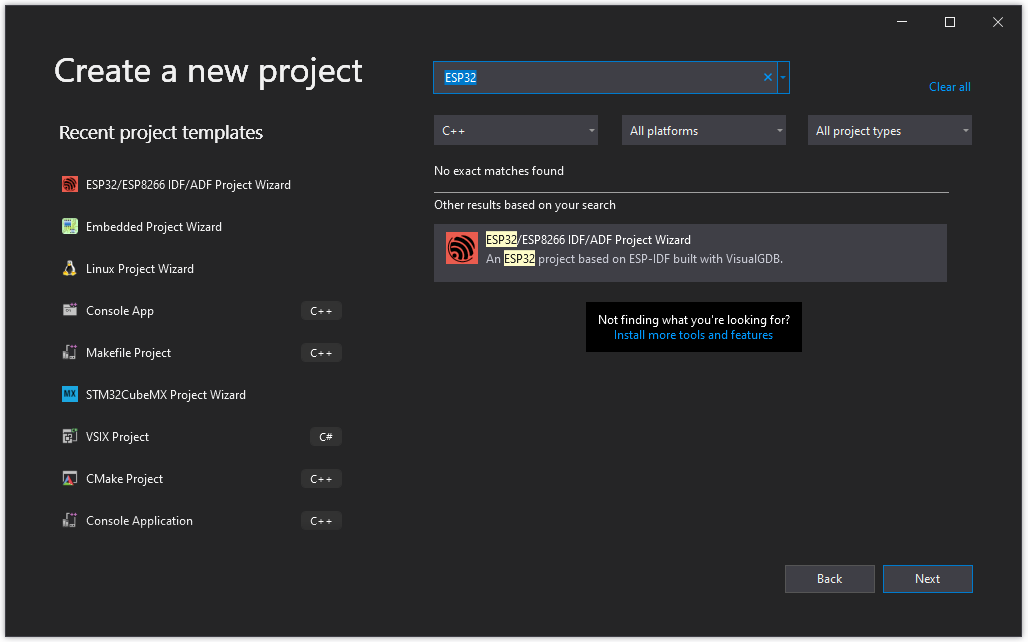
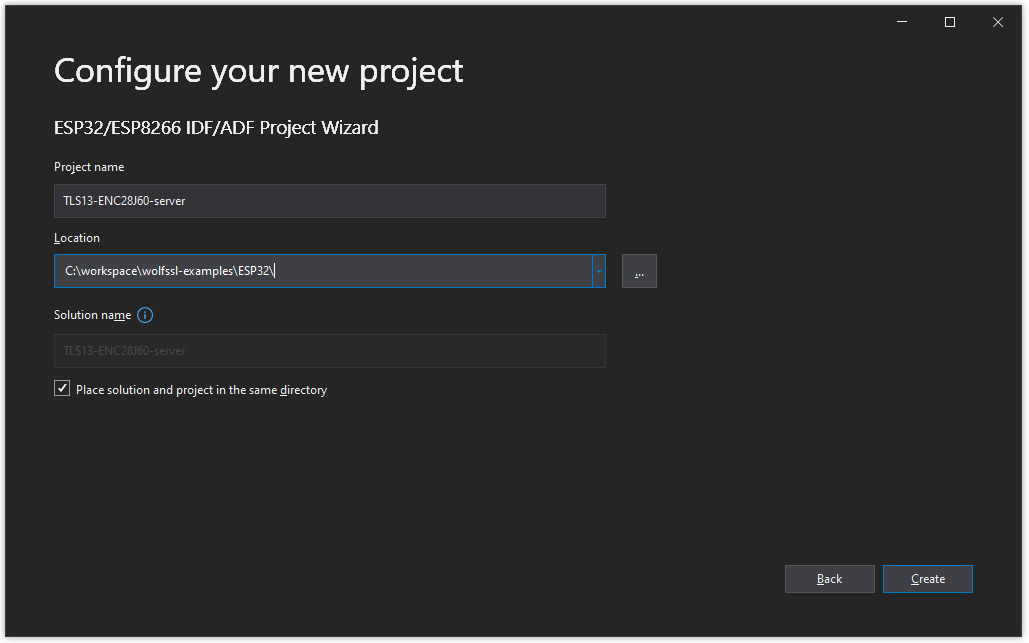
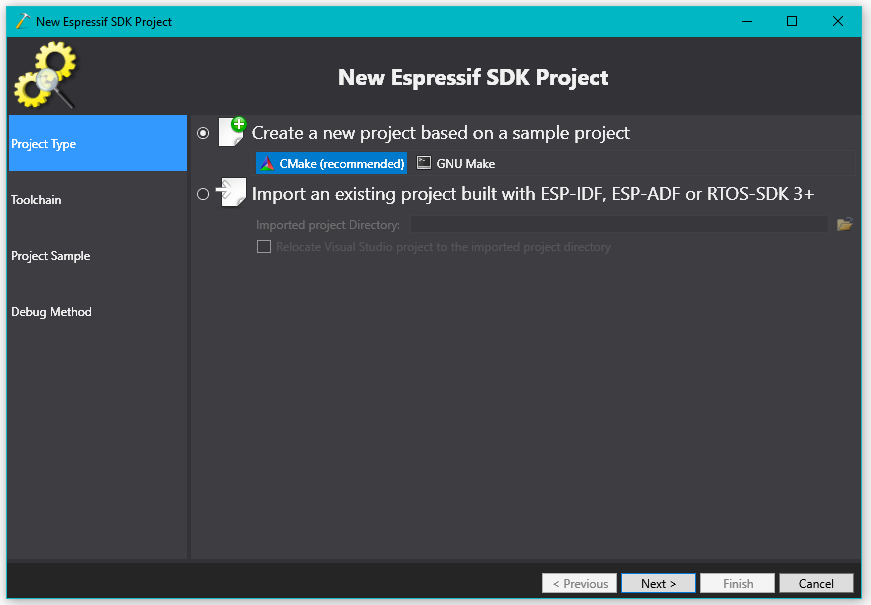
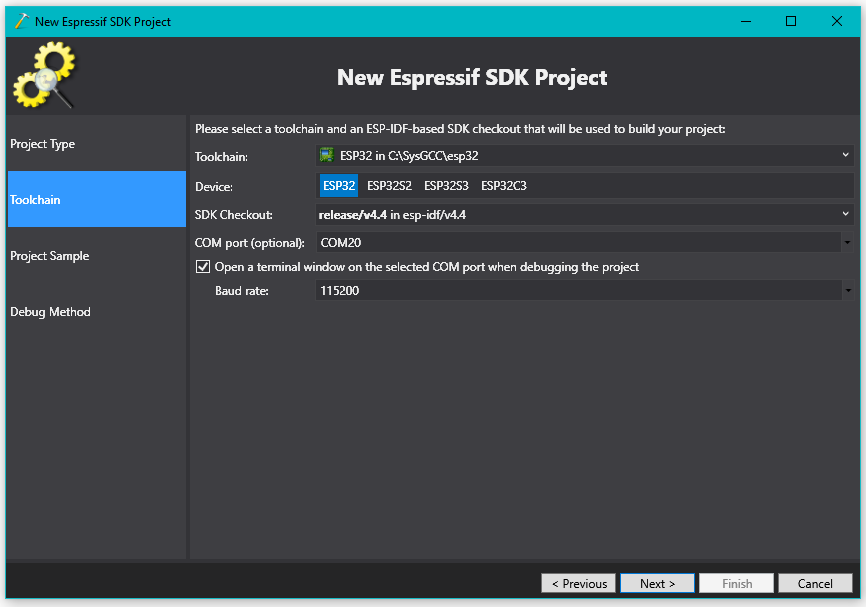
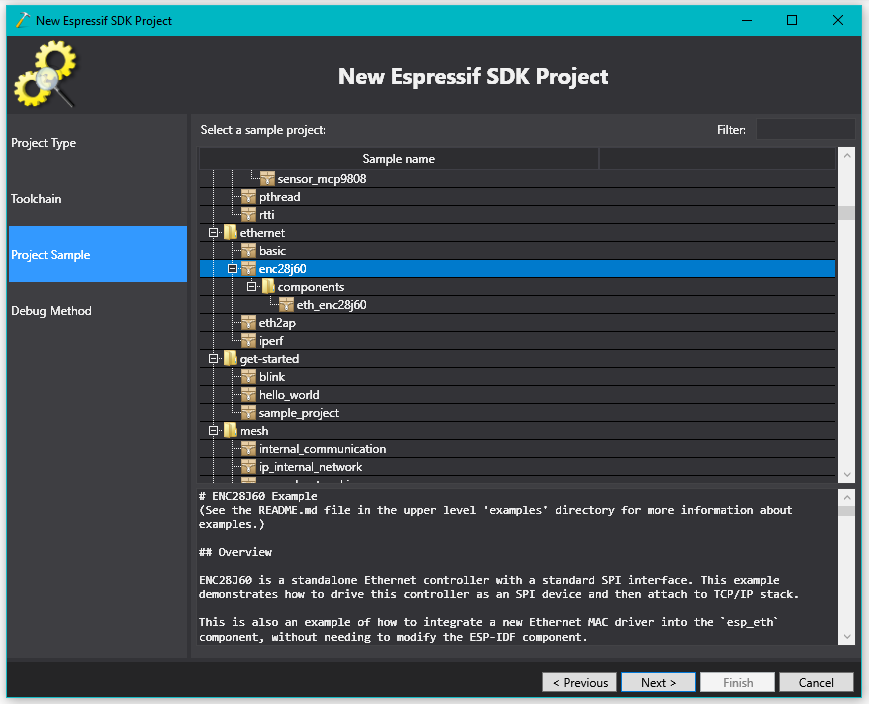
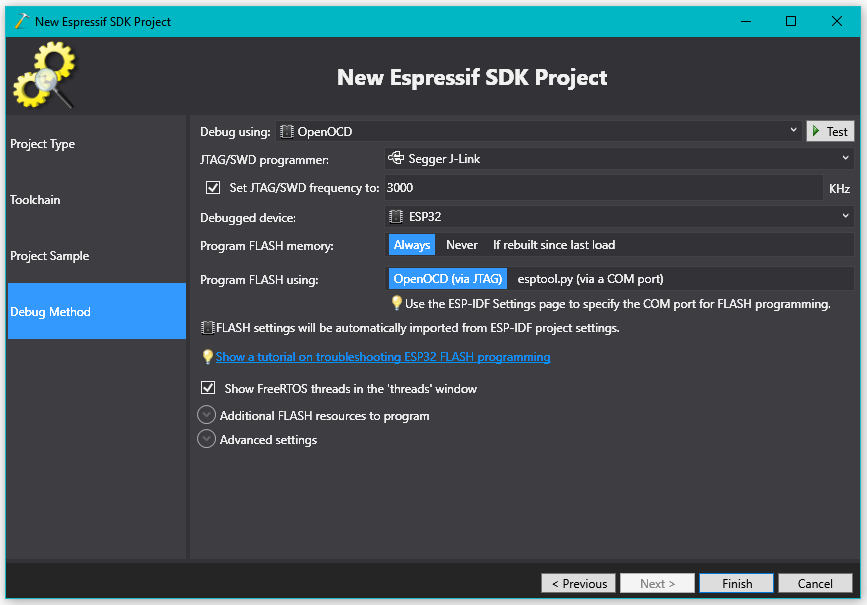
ESP-IDF
Although the examples were created using VisualGDB extension for Visual Studio, the
examples can of course be compiled using the ESP-IDF idf.py.
Once the EDP-IDF is installed, use the setp_win.bat to copy wolfSSL files to
the esp-idf\components directory, typically in
C:\Users\%username%\esp\esp-idf\components or C:\Users\%username%\Desktop\esp-idf\components.
Be sure to run the ESP-IDY X.Y CMD command prompt that has %IDF_PATH% defined.
cd \workspace\
git clone https://github.com/wolfSSL/wolfssl.git
cd wolfssl\IDE\Espressif\ESP-IDF\
.\setup_win.bat
Build with VisualGDB toolchain from WSL
. /mnt/c/SysGCC/esp32/esp-idf/v5.0/export.sh
idf.py -b 115200 -p /dev/ttyS15 build flash monitor
Tips
If JTAG gets into a mode where it is simply always returning an error (app continually resetting) try using serial port to program a basic, operational "hello world". The Arduino IDE or command-line ESP-IDF can be handy here.
Toolchain Switching in VisualGDB
Due to occasional difficulty in switching between toolchains, separate VisualGDB solution files are included for ESP-IDF v4.4.1 and v5.0.
See the ProjectModeSettings of the respective .vgdbproj file:
      <ESPIDFExtension>
        <IDFCheckout>
          <Version>release/v5.0</Version>
          <Subdirectory>esp-idf/v5.0</Subdirectory>
          <Type>ESPIDF</Type>
        </IDFCheckout>
        <COMPort>COM20</COMPort>
        <SuppressTestPrerequisiteChecks>false</SuppressTestPrerequisiteChecks>
        <UseCCache>false</UseCCache>
        <DeviceID>ESP32</DeviceID>
      </ESPIDFExtension>
See also:
-
wolfssl/IDE/Espressif/ESP-IDF (will be migrating to wolfSSL/wolfssl-examples )
-
stackoverflow: What are the differences between .pem, .cer and .der?
Support
Please contact wolfSSL at support@wolfssl.com with any questions, bug fixes, or suggested feature additions.